Blog

Normandy 2013 – Day#5 Wednesday 5th June

Operation EPSOM & Hill 112

Operation EPSOM revisited

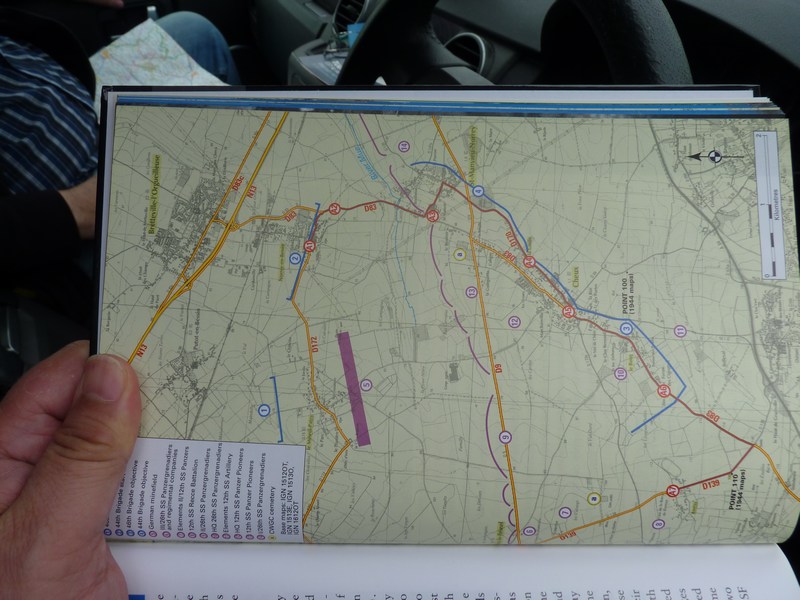
So, waking up to a dull & overcast morning (as 5th June was, last year), we set off to follow one of the Tours in the BattleZone Normandy book on Operation EPSOM written by Lloyd Clark.

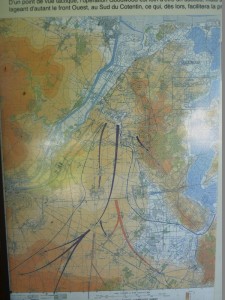
Operation EPSOMOperation EPSOM was the Allies third attempt to take the D Day objective of Caen; this map shows the area of the operation

Battlezone Normandy Books

The BattleZone Normandy books were released in 2004 and are an absolute “must have” if you’re touring in the areas which they cover. They are split into for sections… part one is a brief introduction & part 4 provides some suggestions for further research “on your return”. The “meat” of the books, however, is in parts two and three

Part two covers, in chronological order, the history of the event that is the subject of the book… whether that be one of the landing beaches or, as in this case, a later operation

Part three consists of 4 or 5  Battlefield tours that are not only outlined in great detail (and are therefore very easy to follow), but add additional history detail. In addition, whilst, generally speaking, the maps used in part 2 are copies of the WW2 maps actually used by the Allies, those in part 3 are modern 1:25,000 maps and so are easily followed on today’s roads. What’s more the tours tell you exactly where to stand & what to look for (usually with photographs – both contemporary and modern)

Tour 1 following events of 26th June 1944

The first point that we aimed for was Bretteville l’Orgueilleuse… but of course, being us, it wasn’t that straightforward!! Mind you, contrary to normal practice, we didn’t get lost, either!! In fact, we initially headed to a small village called CULLY. This was because this was the place near where Cpl Tom Caldwell was captured. We don’t know exactly where, but his PoW questionnaire states that he was captured on July 5th 1944 in Normandy (near Cully).

Having visited the village (not much to see, but quite pretty), we continued for a short way towards Bretteville, before a further detour to Rots.
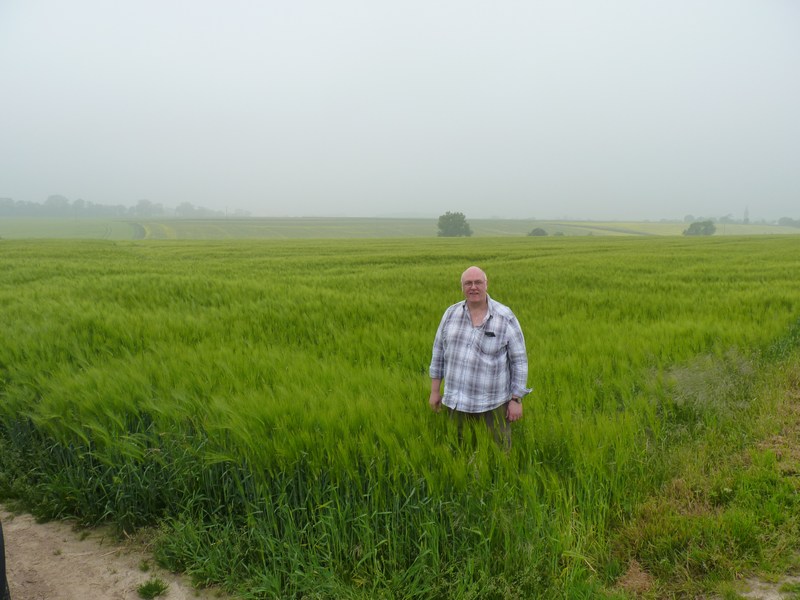
On the way, we stopped by a wheatfield for a quick photo… one thing that you regularly read about is the height of the wheat that the soldiers had to walk through… modern wheat has been changed so that more energy is spent in growing the “ears” rather than in adding height, but the photo gives an impression of what it may have 6th RSF advancing through waist high corn during Operation EPSOMbeen like… ‘though, of course, the wheatfields have now been cleared (hopefully!) of all of their mines!
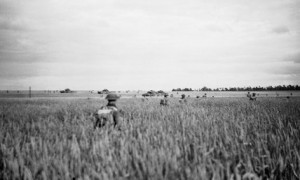
This image from the Imperial War Museum shows the difference in the height of the corn & shows soldiers of 6th Bn Royal Scots Fusiliers (Tom Caldwell’s regiment) advancing during Operation EPSOM

anadian memorial Rots So, on to Rots and a couple of photos… 46 RM Commando memorial near Rots the Canadian Memorial
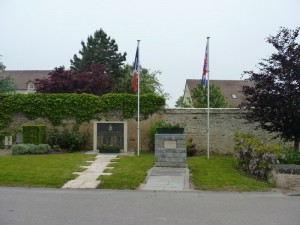
and, a little further on the Memorial to 46 RM Commando.


Back on track

OK, having had our planned detour, we headed back towards Bretteville and then on to Norrey-en-Bessin Canadian memorial“Stand A1” of the tour at Norrey-en-Bessin where we had our “it’s behind you” Panto moment… we parked at the church (rebuilt after the war) and started looking for the Canadian Memorial to the 6th Canadian Armoured Regiment and the Regina Rifles Regiment of 3rd Canadian Infantry Division which liberated the village.
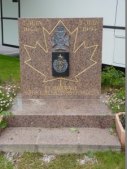
Unfortunately, we couldn’t find it, so we turned around to head back to the car & bang! there it was… sneaked up on us, it did!!
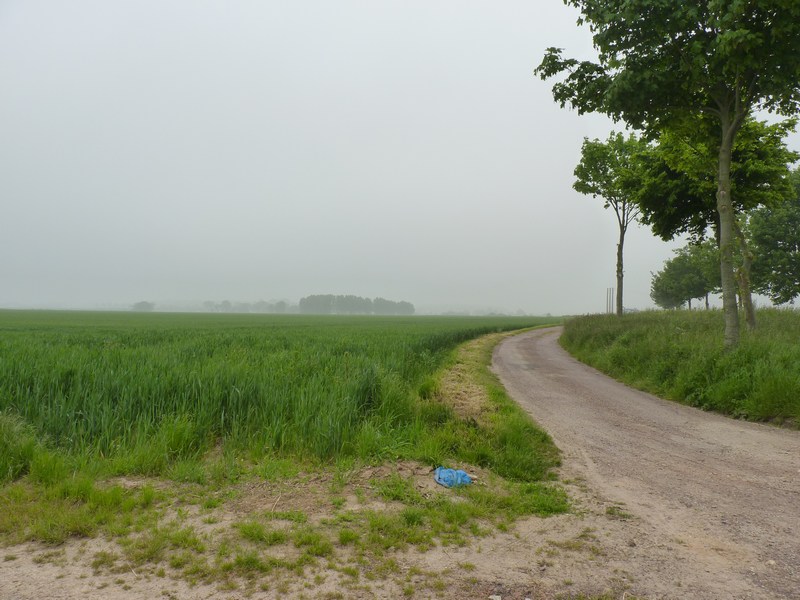
Sunken LaneSo, out of the village for a short distance & parking on the side of the road allowed us to take an almost exact photograph to the one that’s on page 132 of the book that we were following… “The 6th RSF sunken lane”. As these events happened back in June 1944, it is highly likely that Tom Caldwell would have been involved in this action

St-Manvieu-Norrey
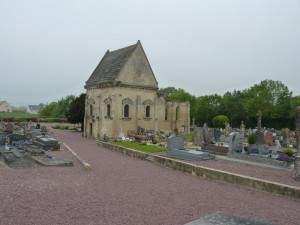
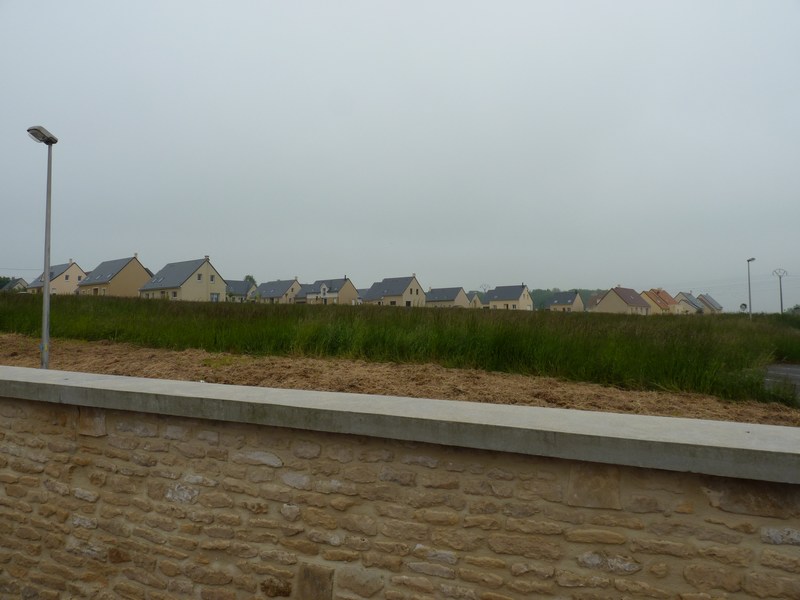
Ruined church at St-Manvieu-NorreyThis is one of those places that highlights some of the good and bad points of following a battlefield tour and trying to imagine how things would have looked “back then”… the “good” is the fact that the church has never been rebuilt (there is a new one further into the village) and stands as a reminder to the ferocity of the battle that took place for control of the village… New Houses at St-Manvieu-Norrey the “bad” are the new houses being built & expanding the size of the village changing it’s outline & making comparisons back to 1944 more and more difficult… this is especially noticable further along our tour where the original village of Cheux has merged with La Gaule and le Haut du Bosq to create an enlarged (and elongated) modern Cheux
Le Haut du Bosq
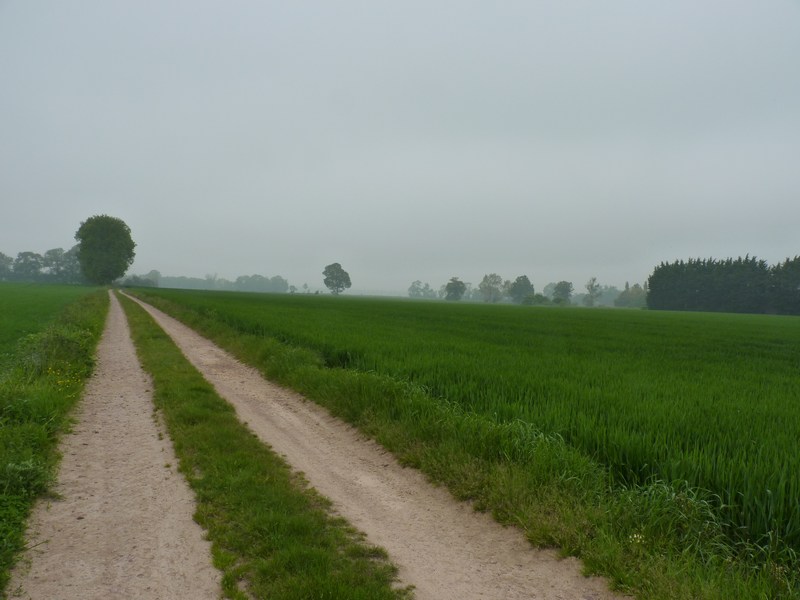
Haut du Bosq looking back (p141)We passed through Cheux (having had more of a look around last year in the company of Albert Figg – a veteran of 112 Field Artillery Regiment – who we would again, soon be meeting)  and moved on to Le Haut du Bosq where, again, we took the opportunity for a photcall matching the one in the book… because we could… looking back towards the startline of Operation EPSOM

Rauray

Following the road up the hill, we then recognised the crossroads that we had arrived at – in the centre of the “Rauray Spur”… a place that we’d found last year (‘though without books or maps!)
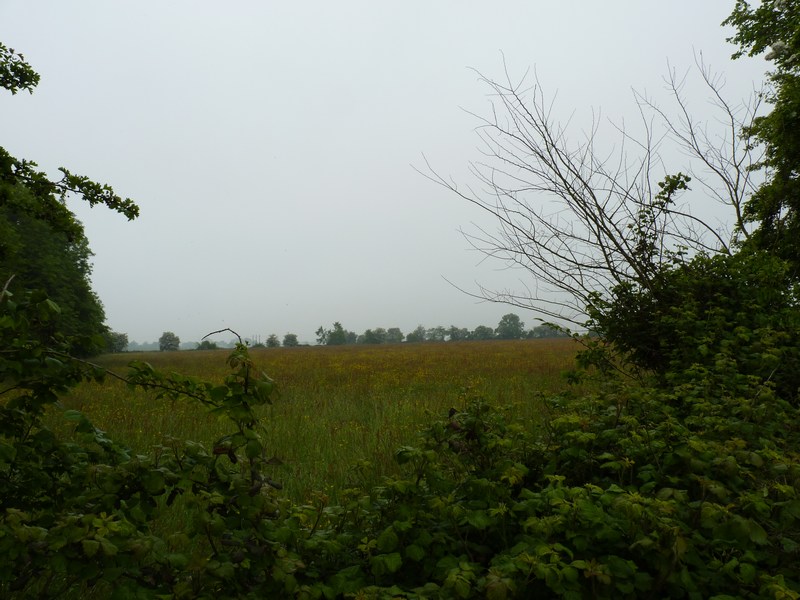
Rauray 5 sided field from A Co HQOn 1st July, 1944, as Operation EPSOM was winding down, the German II Panzer Corps (consisting of 9th & 10th SS Panzer Divisions with additional attached units) attempted to cut through what was known as the “Scottish Corridor” (due to many of the units involved in EPSOM being Scottish). Standing in their way at Rauray was the 1st Battalion Tyneside Scottish regiment; a fierce battle ensued! Kevin Baverstock has written an excellent book of this, taking you through the battle, hour by hour…

Hill 112
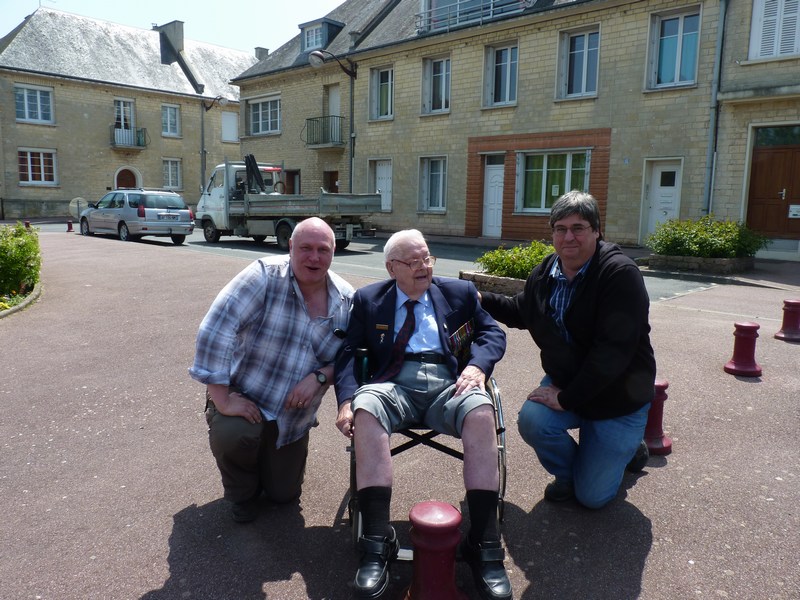
Colin & Glyn with Albert Figg.. unfortunately, we couldn’t stay to have a more detailed look around the area as a quick look at our watches told us that if we didn’t get a move on, we’d be late for our rendevouz on Hill 112 with Albert Figg – a veteran of the battle to take the feature. We were also meeting up with his daughter Annette & Nigel Hay of Milweb before heading down into the village of Evrecy – a repeat of last year’s meeting (also on the 5th June!)

Hill 113 & the Royal Welch Fusiliers
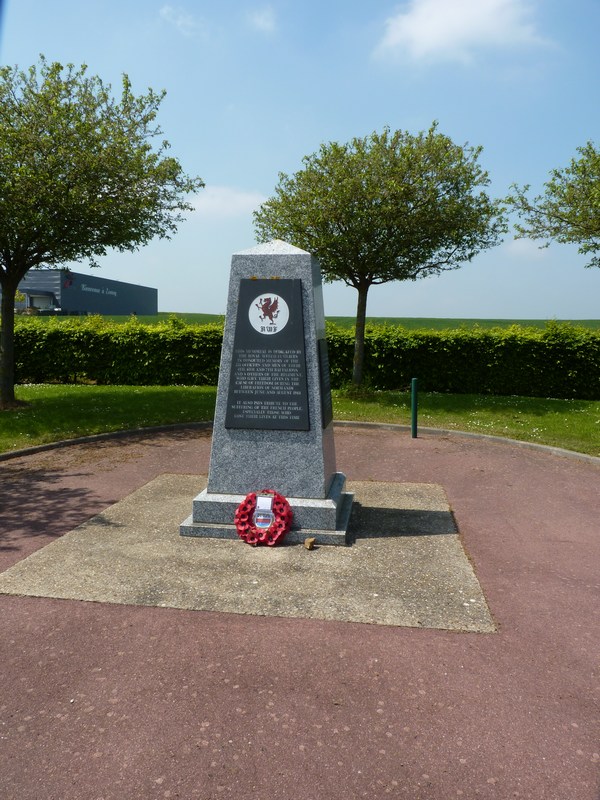
RWF Memorial at Hill 113Just out of Evrecy, is a small memorial to the Royal Welsh Fusiliers who were attacking the feature of Hill 113 (like 112, a rise in the ground) & then onwards to Mondeville. Even with a clear day and binoculars (and no shells coming in) it was difficult to see their final objective, so we worked out where it was on the map & drove there & then looked back, worked out where we were and then arriving back at the memorial could find the “target”… but still not easy to do… heaven knows what it must have been like back in 1944! Hill 113 to Mondeville
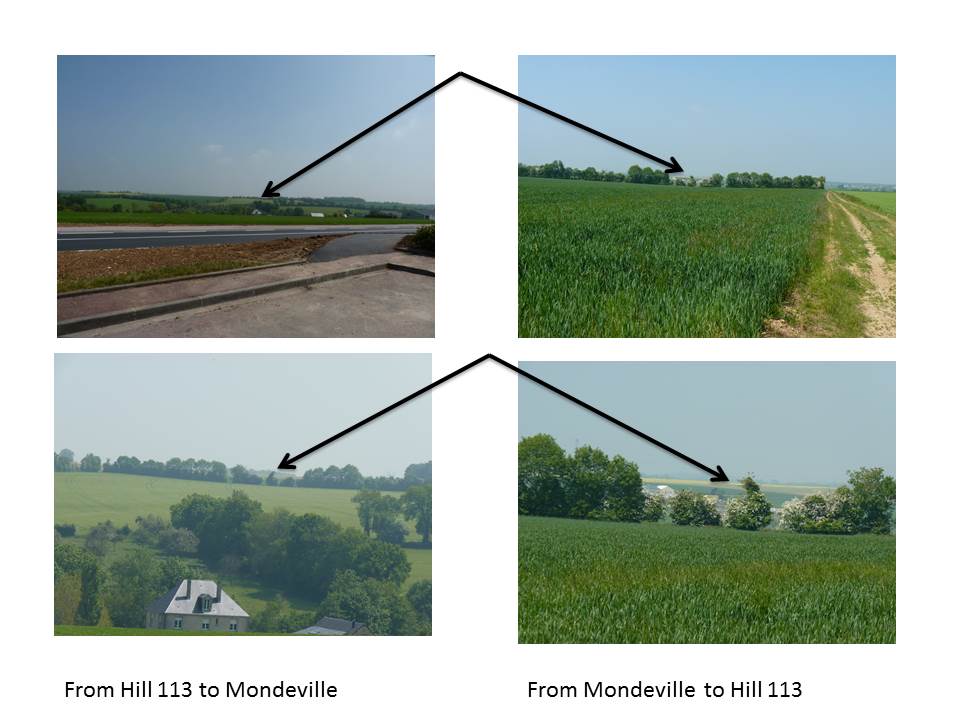
One good thing came from this, however, understanding the real benefit of having map, compass and binoculars when touring battlefields; they make such a difference.

Also, looking at the Battlefield from “The other side of the Hill” (i.e. the German viewpoint), the importance of Hill 112 was very obvious… it’s understandable why the Germans were so reluctant to let it go…

And on to Estry

For the next two nights, we were staying (as previously) with Tony & Jill Stansfield in their wonderful B&B in Estry…

Meedless to say that we couldn’t find it first time… we’re blaming the fact that we were in bright sunshine! And the fact that we’re sure that they keep moving it! But, finally, we arrived (note to self for next year: it’s the second turning to Le Pont Alliere!!)

But, talk about a welcome… wine in the garden followed by a superb meal cooked by Jill, excellent wine & Calvados to finish & even better conversation
 Today’s Photos

Normandy 2013 – Day#4 Tuesday 4th June

Rouen to Operation GOODWOOD

Rouen

Leaving Patrick and the brewery, we headed down into Rouen itself for a look around as we’d been through it on a number of occasions without taking any time out for a good sightseeing.

So having parked up without too much navigation of Rouen’s one-way system required, we took to our feet for a plod around.

Rouen old streetFortunately, Rouen was not as extensively remodelled by the RAF during the war and so many of it’s medieval streets and buildings still exist allowing one to appreciate what Caen might have looked like before war visited.Rouen Rue 17 April

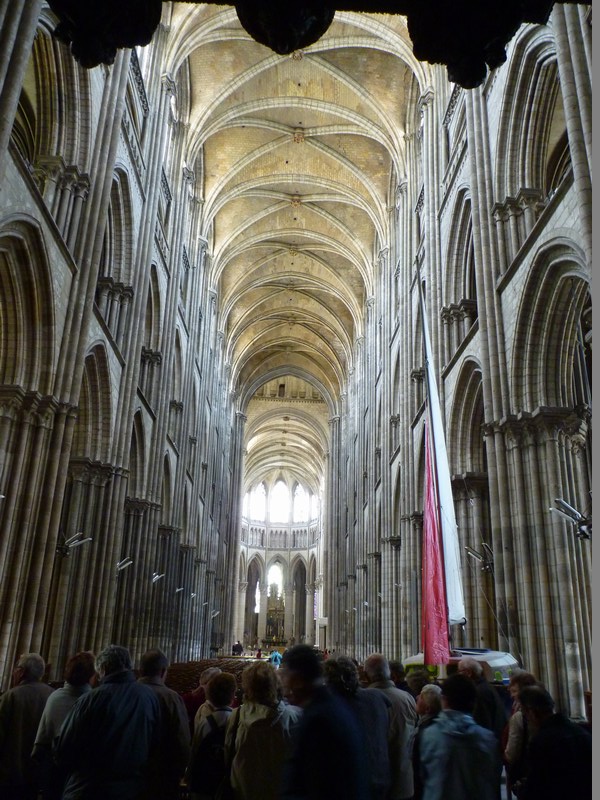
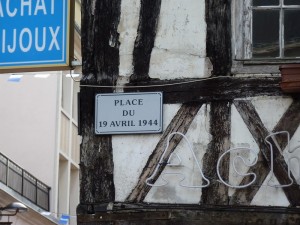
We first visited the Place du 19 Avril 1944… it wasn’t until later (when in the Cathedral) that we found out that this was the date that a Lancaster dropped some bombs on the Cathedral doing some serious damage.

We then moved into the Cathedral (dodging many tour parties in the meantime) for a look around & got scammed on the way in by someone asking for donations to open the door!

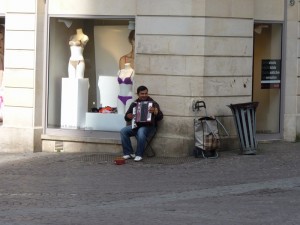
A traditional sight in France (at least as we are led to Rouen Accordion Playerbelieve) are accordion players on the side of the street, ‘though until this year, we’ve not seen any… there must have been a convention running, or something, as we saw 3 during our visit. In the background of the photograph, you’ll also see something else that seems to be well represented in Rouen – ladies underwear shops! In fact, they only seem to be outnumbered by the number of tour parties getting in the way!

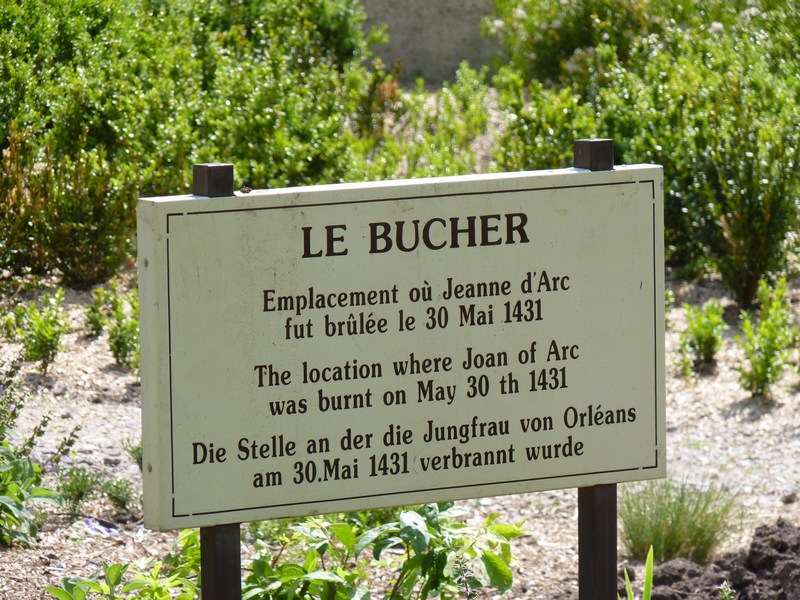
The next “touristy” bit was slightly gruesome… the site where Joan of Arc was burnt at the stake by the English!

Rouen Joan of Arc Rouen (22)

Le Chateau du Robert le Diable

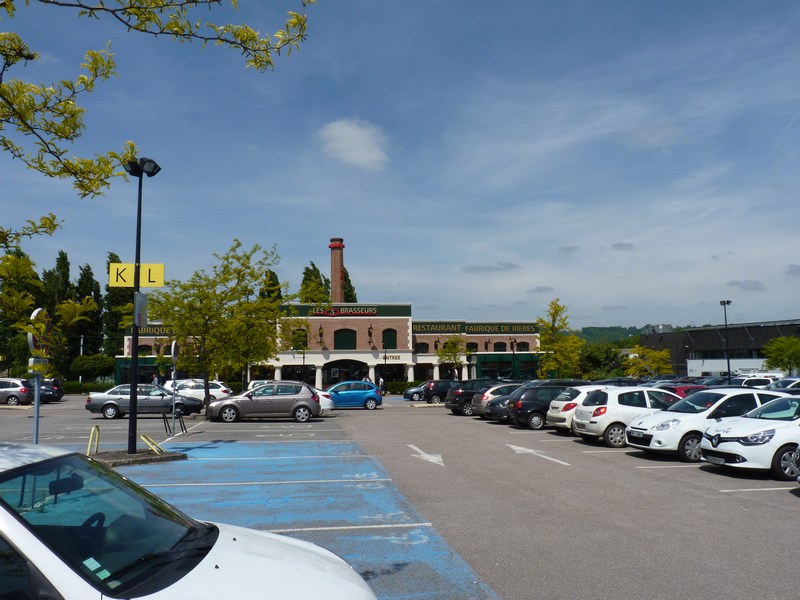
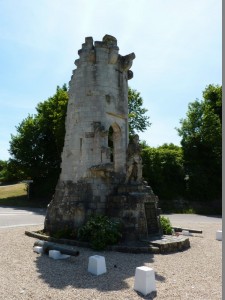
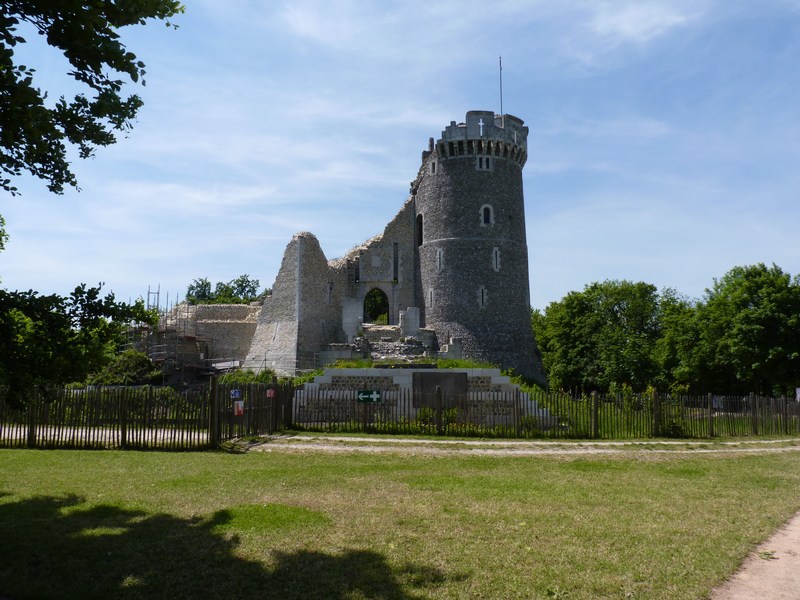
Trois Brasseurs RouenLeaving Rouen, we visited our first Trois Brasseurs brewpub of the holiday & then moved on to a place that we’ve tried to find for 3 years running… Le Chateau du Robert le Diable.Chateau Richard le Diable - small memorial

At first, we thought that we were facing another “Spinal Tap” moment (you may recall our trip to the Menhir near Caen) as the first “ruin” that we saw was not particularly impressive – certainly not as a Chateau, but then we noticed another sign, went round the corner & there it was…

Chateau Richard le DiableInterestingly, the French seem to like preserving ruins by rebuilding them, whereas the British leave them as they are… I wonder who is right?

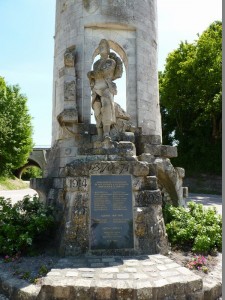
Unfortunately, the Chateau wasn’t open, soChateau Richard le Diable War Memorial
having had a good look round the outside (which was still pretty impressive), we went back to the first monument which we discovered was a war memorial to the Franco-Prussian, First and Second World Wars…

Cagny & Operation GOODWOOD

e then headed off on the motorway towards Caen, stopping off to have a look over part of the Operation GOODWOOD battlefield & the village of Cagny which was approximately half way through the advannce & the site for the famous (or infamous, or even non-existent!) 88mm guns taken over by Hans von Luck!

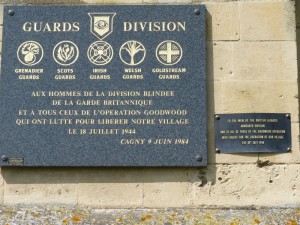
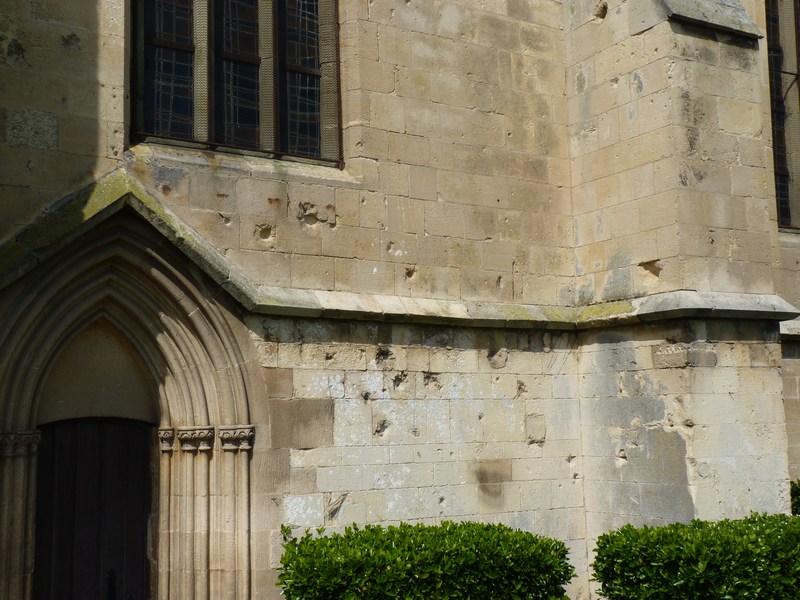
Guards plaqueIn the Mairie there’s a small plaque commemorating the Guards Armoured Division that fought here during the operation. The impact of the fighting can still be seen on the church that
stands next to the mairie. Opposite the Mairie on the green is an information board which explains & illustrates both Operation GOODWOOD & its impact on Cagny.

Cagny Operation GOODWOOD info boardAs you drive along the main road towards Caen from Cagny, you’re going across the line of advance for Operation GOODWOOD, with the British start lines to your right & the objective of Bourguébus Ridge to your left… whilst a dominating feature when you’re on it, I’ve always found it difficult to discern the ridgeline from the Allied lines…

From here, it was but a small trip to  Mondeville & our hotel for the evening which (rather conveniently!!) backed onto our second Trois Brasseurs brewpub of the holiday!

 Today’s photos

Normandy 2013 – Day#3 Monday 3rd June

England to Rouen

Normandy, here we come…

In which our heroes set out from England, go under the sea & spot the Atlantic Wall on their way south to end with a well-earned beer or three!

p bright & early – the restaurant was supposed to be open from 7, but sat outside waiting for Glyn at 6:50am, I was nearly run over in the rush by the “wrinklies” who were on a package holiday… quite amusing how many of them appeared to be carrying hangovers!

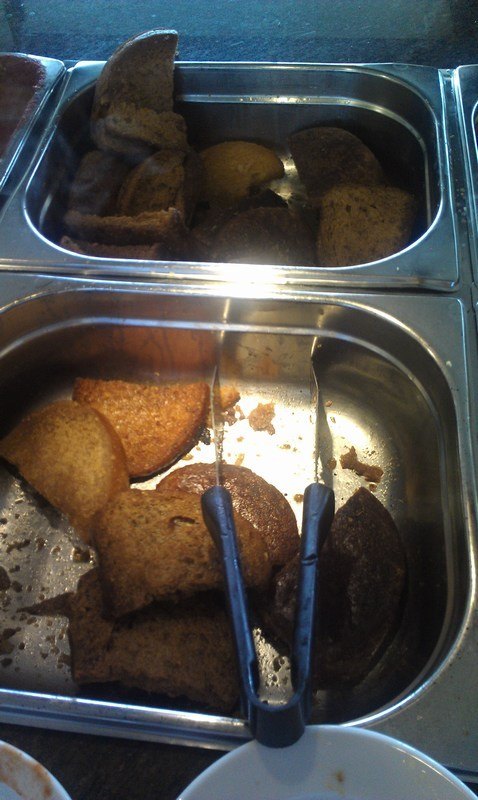
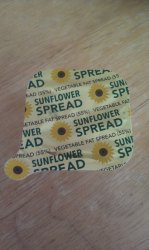
So, one pretty amazing breakfast later (proper fired bread & everything! ‘though no butter, I had
to make do with sunflower spread… & for those of you that don’t believe me, here’s the evidence…)we set off for the Chunnel Terminal…

…at the same time as what appeared to be hundreds of screaming kids! It’s alright for teachers – 2 week’s holiday at the end of May & then a week or so in France on a school trip!!

Did a bit of typing in the terminal building whilst waiting & had a scalding brown drink… they called it “tea”!

Then off, under the Channel to France on our Normandy Tour of 2013!

“Atlantik Wall” Tourists

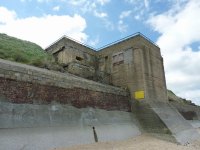
So, choices – head straight down to Rouen or do some sight-seeing first? Tourism won out & so we headed out to Sangatte & very quickly came across evidence of Hitler’s famed “Atlantic Wall” still standing & looking very impregnable.

Whilst most of these are on private property, they can be seen from the beach & look very imposing, though the effects of tides & erosion are beginning to have a serious. Even so, today, 69 years on from D Day, to have assaulted the Pas de Calais area would have clearly been madness!
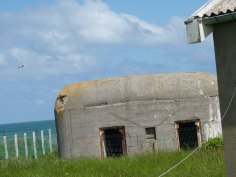
As you drive south, following the coast road, more and more of these emplacements come into view; some hidden behind the bluffs at the cliff edge waiting for targets to walk in front of them.

Each year that I see these, whether up near the Pas de Calais, or down in Normandy, itself, I become more & more in awe of the guys that not only took on the assault of the coast & then the fighting afterwards, but also for the planners who got so much right.

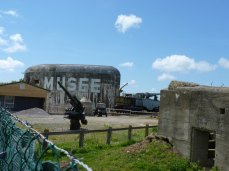
So, we started with a bit of a coastal tour until we arrived at the Batterie Todt – a museum to those who built the Wall – many under duress & as slave-labourers; unfortunately, time didn’t permit us time to go into the museum, but I did manage a few snaps over the fence.
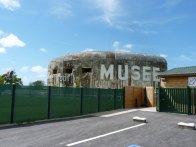
Then, following a lunch at the restaurant next door to the museum, it was off again: target Rouen

Brasserie du Chant du Loup

One day, when visiting the Brasserie du Chant du Loup, we’ll find a clear map to follow & the right road once we’re on that map! However, having been before we knew some of the landmarks to look out for & soon arrived at our destination.

Patrick was there to meet us & was soon bringing some of his re-receipied beer for us to try… excellent! Then, as the local restaurant (where we ate last year) was closed, we’d asked Patrick if we could eat there & his wife prepared a wonderful feast: salad to start, followed by meat, then cheese… and then (sort of soft merangue floating in a creme anglais) … very nice, though I couldn’t eat all of mine (explosion danger from too much food!), so Patrick gave the final piece to the dog who has a craving for it!

So, another couple of beers & then off to bed… all in all, a great day.

Today’s photos

Normandy 2013 – Day#2 Sunday 2nd June

Heading South

And they’re off! Normandy 2013 here we come…

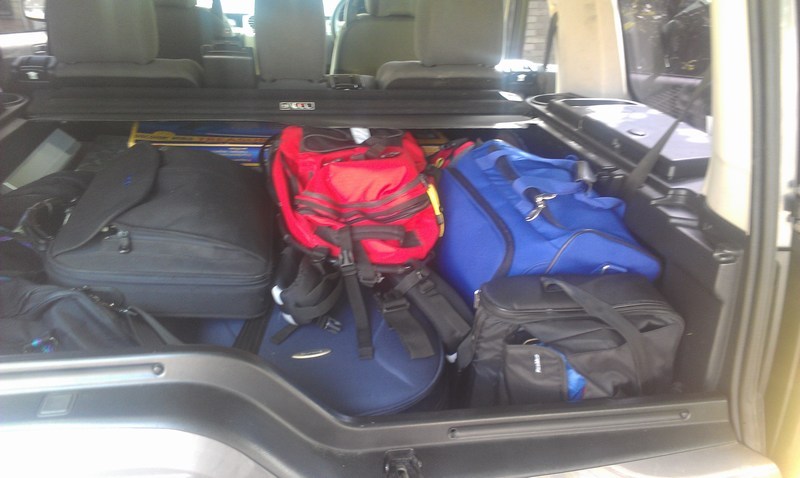
How much stuff do two guys need?Up bright and early (well, one of us was!) and load up the car… Yes, there are only two of us going!

Then on to the Motorway & heading south, with music from our past sounding clear over the CD player.

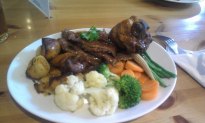
A stop for lunch at the King William IV pub (“proper Sunday lunch”) with a brief tour of Box Hill (where the 2012 Olympics had their cycle race) & then on to Folkestone in the company of the BBC Long Wave comentators of the 2nd One Day International cricket match between England & New Zealand which we lost! Apparently, one of the New Zealand batsmen played a really good innings & they must have mentioned this every 5 minutes!

Of course, “Comentator’s Curse” struck & every time they mentioned that this or that English batsman needed to have a good innings, they followed it with “He’s bowled him” or “He’s out”. Deep Joy… I’m sure we would have won without their interference!

Folkestone

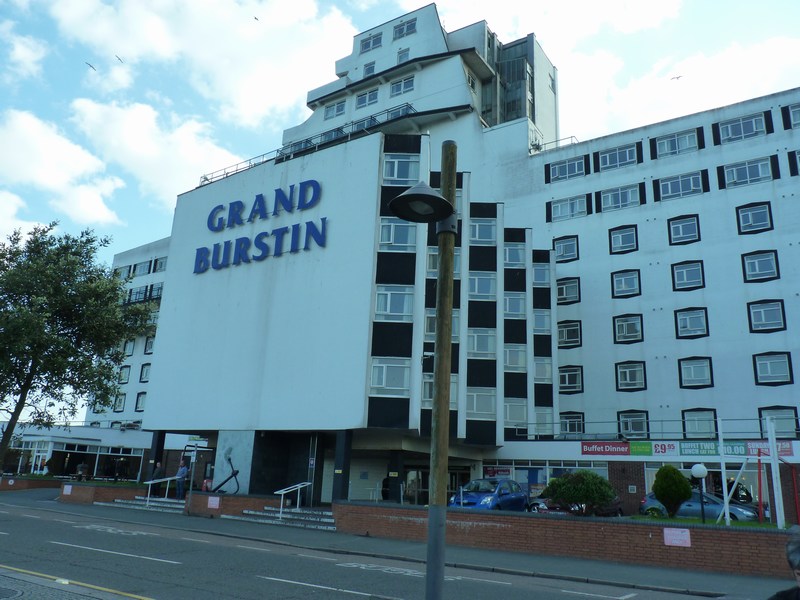
Arrived at Folkestone (passing the Battle of Britain museum & noting for a future visit) & pulled up at the Grand Burstin Hotel… Grand Burstin Hotel Folkestonevery Grand & Burstin out of the harbour! Sorry!!

Slightly worring were the signs to use alcohol sanitisers before you went in to the hotel, when you left, when you went in to the restaurant & when you came out! But a comfortable bed & a sea view (over the lorry carpark!) were ok.

So, a tour around Folkestone in search of food & other refreshment was in order…

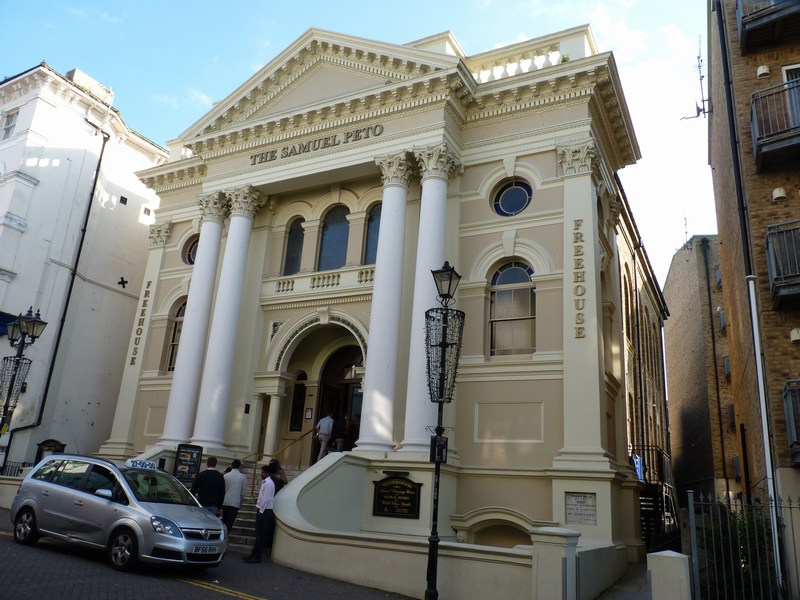
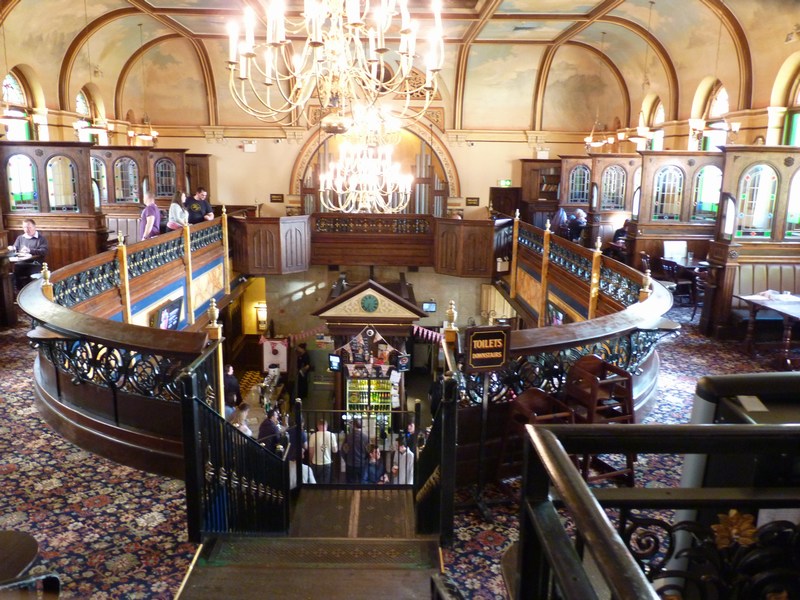
Wetherspoons FolkestoneSoon came across the local Wetherspoons pub – the Samuel Peto – very imposing, looks like an old Wesleyan chapel. Some people don’t like Wetherspoons, but their reasonable food & beer both at reasonable prices (we almost had both pints for the same price as one had cost earlier in the day!) make them a good call. When you add in the quality of some of the Wetherspoons restorationresoration & preservation work in some of their pubs (this one being an excellent example), you can understand why they’re a good thing!

Having eaten, we then took a further walk around Folkestone’s Good Beer Guide pubs, ‘though one was, unfortunately closed as was an apparent Brewery Tap. Good beer had where found & then back to the hotel for a decent night’s sleep ready for the trip across the water tomorrow

Today’s photos

Normandy 2013 – Day#1 Saturday 1st June

Black Country brewpubs

Black Country brewpubs tour

So, the great plan was to visit a number of Black Country Brewpubs to set ourelves up for the coming week and a bit in Normandy…

Public transport when it works, works really well… unfortunately, it’s very rarely a nice direct route at the time’s you’d like!

So, into Walsall & then bus to Dudley…

… but a stop-off at the Toll End Brew Pub for some light refreshment on the way was called for. Unlike some occasions when we’ve called in here, there wasn’t a beer festival running so just the one before the next bus…

Of course, with our timing, we miss the bus & so are forced to have a second beer!

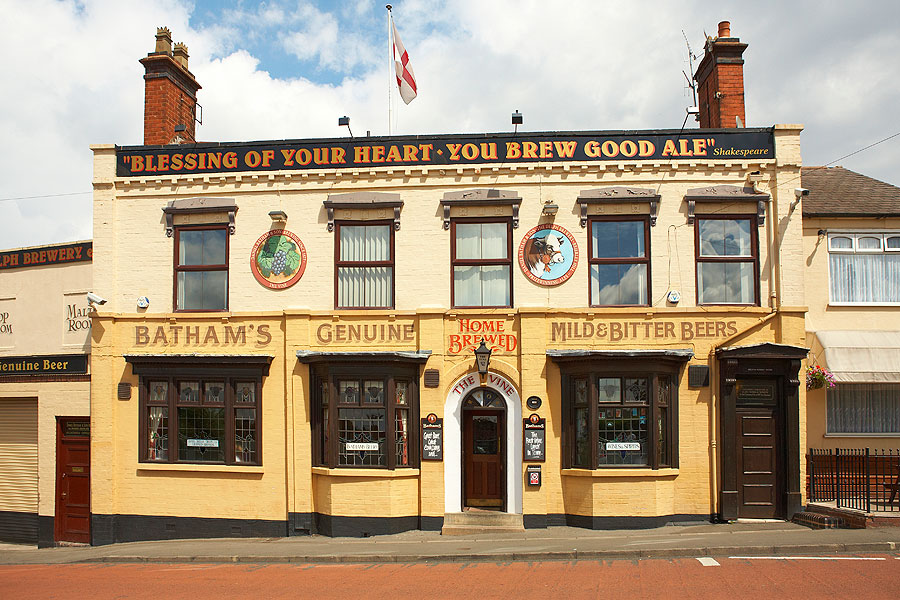
Batham's Brewery Tap - The Vine or Bull & BladderThen on into Dudley (or as some would have it “Dudleeeyyyy”), a quick change of bus & on to the Batham’s brewery tap. Officially, it’s the Vine, but known worldwide as “The Bull and Bladder”. Superb pub with a quotation from Shakeaspeare on the outside: “Blessing of your heart. You brew good ale”
First up was the mild, dark (but not too much) & delicious… followed by a pretty awesome pint of bitter which was well accompanied by home made food (rolls, sasuage rolls & pork pie!! Yum in the 3rd degree!!)

And then on, again… a difficult choice, Ma Pardoes, The Park (Holden’s brewery tap) or even slightly wider afield, but in the end, the Beacon at Sedgley won our with a visit to the Sarah Hughes Brewpub. A new beer greeted us: Boadacia – very nice, to be honest, but we had to finish with a pint of “Sarah” a 6% strong mild… and it was on excellent form!! In fact, it was almost more than we could manage to struggle away!

So, then walks & busses back to Glyns ready for our main trip south tomorrow, secure in the knowledge that some of our old Black Country haunts hadn’t let us down!


Normandy tour 2013

Normandy…

And so it came to pass, in the Year of Our Lord Two Thousand and Thirteen, that our heroes did decide that the time had come to once again embark on their quest to quaff ales and wines from far and near, to eat food that they were not sure of and to boldly go where…

Ok, ok, that’s enough of that… it’s time for our Normandy tour 2013!

This year, parts are less organised than usual (yes, that is possible!), whilst others are more formal as will become clear.

So, what’s on the agenda for this year…

Day 1 – Saturday 1st June

Well, our Heroes are starting close to home (probably) & taking advantage of the fact that the weather looks like being good & so will be visiting (by public transport!!) some of the well-loved breweries in the heart of the UK – The Black Country – where Colin & Glyn come from. So, hopefully, it will be “Hello” to Ma Pardoe’s , The Bull and Bladder (The Vine – home of Batham’s beers & a

Shakespeare quote outside – see, we can do culture!!) & others… unless we change our minds, of course!

Day 2 – Sunday 2nd June

Moving nearer to France, we’re travelling down & staying overnight in Folkestone… The Grand Hotel is our abode for the night (with our shared like of Deep Purple – the group, not the colour), staying in such an aptly named hotel appealed… ok, it might not be Montreux, but hey, it’ll be interesting!

Day 3 – Monday 3rd June

Sees us heading over (or rather under the Channel) & then on down to overnight in Rouen. Last year, we came across the Brasserie Du Chant du Loup & enjoyed staying there & drinking Patrick’s beer so much that we decided that we’d have to return… we might even take a look around Rouen. Mind you, after last year’s almost-fiasco, we’ll be making sure that we have plenty of fuel for the car!!

Day 4 – Tuesday 4th June

Today we’ll be taking a further look around Rouen (especially if we didn’t do as much on Monday) before travelling over to Normandy & Caen in particular to Les Trois Brasseurs – a brew pub that we almost didn’t find two years ago! We’re staying close by, this time, so our navigation had better be at a higher level this time as sleeping in the car doesn’t appeal!! And before any of you comment on the further inclusion of beer into this trip, I should point out that it’s a tough job doing this, trying all these beers… but someone’s got to do it, so it might as well be us!

Day 5 – Wednesday 5th June

Today sees a planned cranking up of activity WW2-wise when we’ll be re-visiting part of the EPSOM battlefield & then meeting up with a Veteran of the fighting – Albert Figg – & seeing how his plan to have a tree-lined approach to the Churchill tank & viewing platform on Hill 112 is going; we’ll then be having lunch with Albert & his daughter, together with our friend Nigel Hay of www.milweb.co.uk fame in the same bistro as last year – hopefully up to the same standard!

The afternoon will see us taking in more of the battlefield, before moving on to Tony & Jill Stansfield’s wonderful B&B near Estry

Day 6 – Thursday 6th June

The 69th Anniversary of the D-Day landings will see us busy around the BLUECOAT area of operations (late July/Early August 1944) with visits to Hill 226 (where tanks of 3rd Battalion Scots Guards, part of 6th Guards Tank Brigade) were badly mauled by Jagdpanthers of Schwere Panzerjager Abteilung 654. We’re also hoping to meet up with Peter & Eain Findlay and visit the museum at Tilly sur Seulles run by Stephabe Jacquet. Following this, we’ll be joining in with the locals at the ceremony of Remembrance at St Charles de Percy Commonwealth War Cemetery

Day 7 – Friday 7th June

Today has been scoped out really well… in other words, at the moment,m we have no idea what we’ll be doing! Eventually, we need to make our way up to UTAH Beach as we are staying with Eain & Peter for a few days. So hopefully, we’ll be able to “bag” another museum, as the UTAH Beach one is within walking distance.

Day 8 – Saturday 8th June

Airplane spotting today… or rather looking for the holes in the ground that they make when they hit! We’re pretty sure that we’ve located the place that Major Raymond P Elledge brought his P47 down, but this year we’re going to have a bit more of a dig in the undergrowth to see if we can find anything else to support  our ideas.

Day 9 – Sunday 9th June

More airplane spotting – this time to see if we can locate the place where Francis Gillespie’s P47 hit the ground. From his MACR report, we kow that it was South-East of Lessay, near the hamlet of Le Bocage, so hopefully there might be someone in the area that could perhaps give us a clue…

Day 10 – Monday 10th June

Hopefully, the weather will be good today as we’re taking Veteran Bill Sullivan (505th PIR,82nd Airborne) & his wife, Elizabeth, around some of the places that he & Morris Sheppard visited whilst evading from the Germans having been captured on D-Day & then escaped. We met Bill & Elizabeth last year & promised that this year, we’d do the “tour”. Bill had already provided some photos of the places from his vivit in the mid-1990s to Jim Sheppard (Morris’s son), who’d forwarded them on to me & we were then able to identify the places & meet some of the families of some of the French people that helped them. So looking forward to some nice reunions. We have a planned itinerary, ‘though of course, it’s a well-known military maxim that no plan survives initial contact with the enemy! So we’ll see what happens to ours!

Day 11 – Tuesday 11th June

A long day travelling in prospect as we leave Peter & Eain at UTAH Beach & travel most of the way back through France to stay over at St Omer. We stayed there last year & Glyn managed to find the brewery! I didn’t, so it’s only fair that we return!

Day 12 – Wednesday 12th June

And so it’s back home to the UK, hopefully with lots of images, memories & suntan… we shall see, I suspect that the first two are a given… the other takes additional work, I suspect!


… of course, these are just the plans… the reality could be quite different… check out the daily links (or the detailed blob to find out what really happened & how well we stick to our plans!!

Phil Harder – RIP

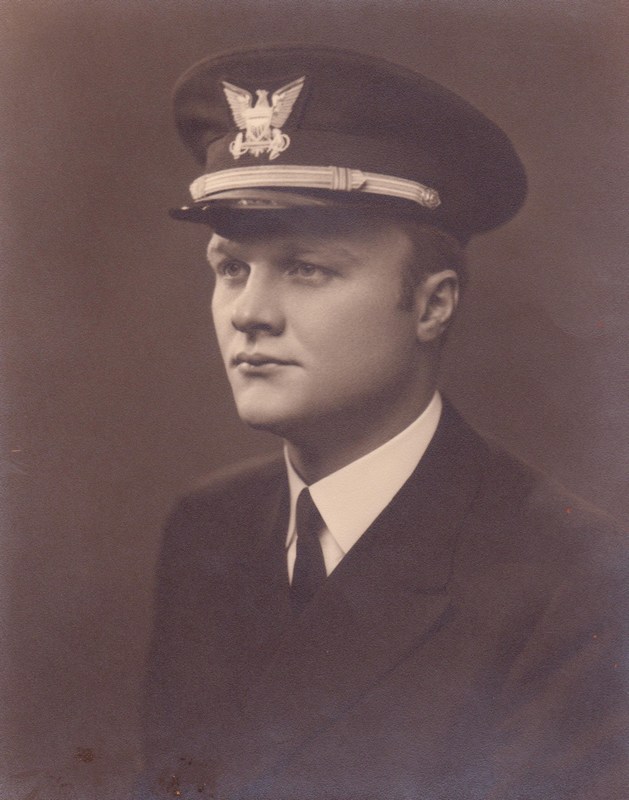
Phil HarderJust received the sad news that Phil Harder, brother of Flt Lt John Harder, passed away on 16th April.

Phil’s Obituary is here: http://www.legacy.com/obituaries/startribune/obituary.aspx?n=philip-m-harder&pid=164383627&fhid=4454

This photo of Phil in Coast Guard uniform was supplied by Bobbie Harder (one of John Harder’s daughters & Phil’s neices)

I spoke to Phil a couple of years ago to discuss the “Men in the Shed” project & specifically his brother John. The conversation was full of humour & fun, reminiscing over the past. Phil then kindly followed this up with a letter…

John & Phil Harder

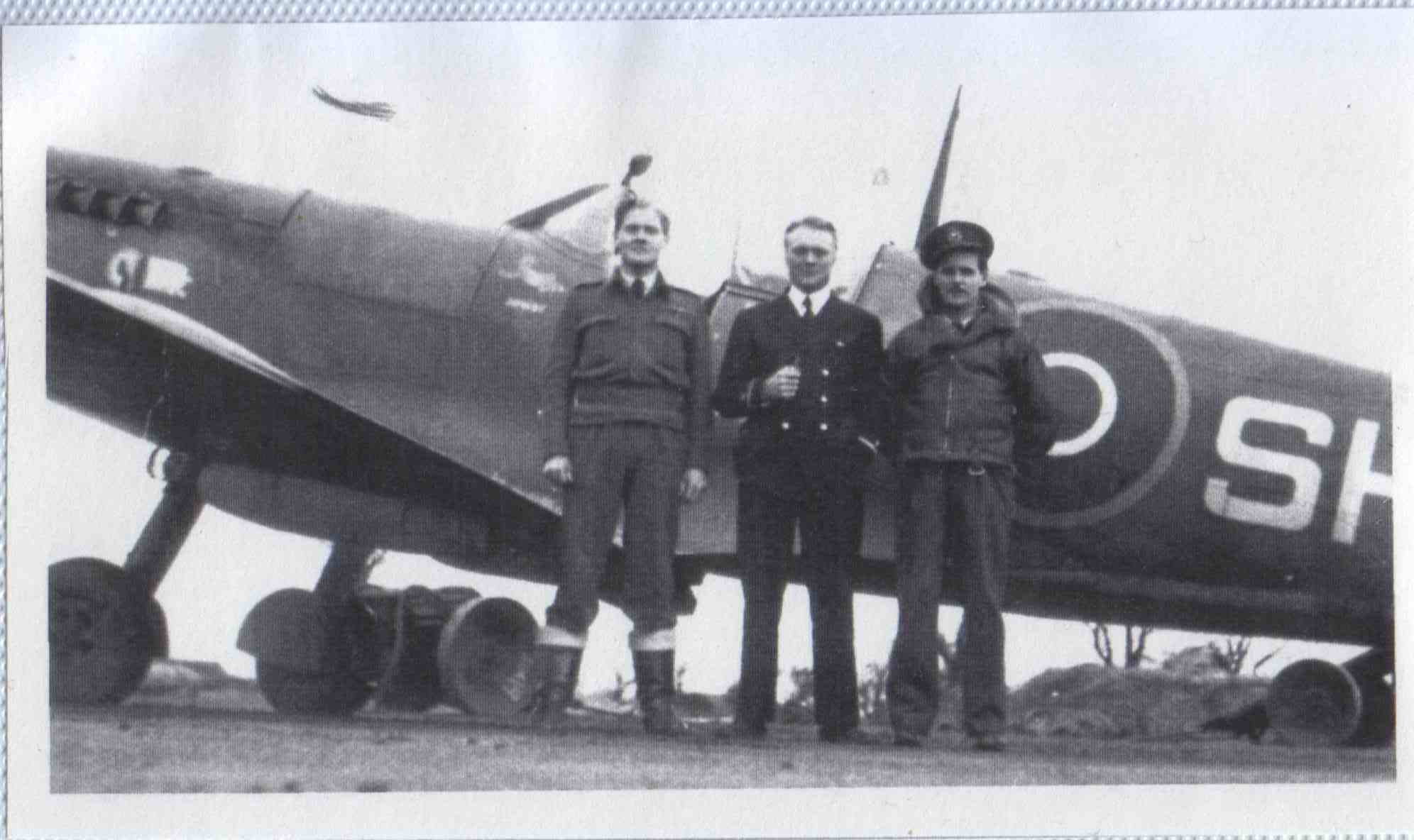
John Harder (L), Phil Harder (C), “Trapper Smart” (R) in front of Flt Lt John Harder’s Spitfire SH-L


Dear Mr Foster

I appreciated your phone call of last night re my brother John – John W Harder, RAF – who was shot down shortly after D-Day inland from the Normandy Beaches.

I was a Lt (JG), US Coast Guard – Navigating Officer in an LST (Landing Ships Tank) at that time. We were in at H+3, about 8am, on D-Day – at Sword Beach – carrying British troops. We had an easy time of it, compared with Omaha Beach. As I remember it, Sword was closed down subsequently; our later runs were mostly to Gold and Juno Beaches.

It all seems like a long time ago (and is; I’m 85 but relatively spry).

John loved the RAF and England; I share his feelings. My wife, Maggie, lived in London in 1935, ’36, ’37 & ’38 where her father was opening a branch for Banking Trust (now Deutsche Bank). We’ve visited London a number of times and with the help of a cabby found the house she lived in back in the ‘30s.

I’ve made passages there in the original Queen Elizabeth and in QE2 and once one way in Concorde – what a flight, 3hr 14min from New York.

Late in the summer of ’44 I was transferred into LCI(L’s) – Landing Ship, Infantry – berthing often in the River Dart. Lovely country, the fish & chips and Brussels’ Sprouts were superb.

Then we went to the Pacific – Eniewetok and Guam, preparing for the invasion of Japan. I’m one who’s grateful for the Bomb. We thought invasion of the Japanese mainland would take 1 to 3 years and many casualties.

Half of our LCI flotilla went to Okinawa at the heights of the Kamikaze attacks. One was hit, ‘though the main targets were destroyers in the radar screen and carriers (that hit must have been a mistake; an LCI(L) is ???? – 4 Officers, 20 Enlisted men. ‘though when loaded they carried 200 troops)

I was lucky – remaining in Eniewetok, doing odd jobs, fishing, swimming – a little air/sea rescue.

The war ended: I had a pretty high number & soon was on a freighter going home.

As I look back on it – I rather disliked all the Pacific duty. I loved England and the people. In the LCT we were running through the Channel day & night after D Day during the worst of the V-1 attacks. We ???? carried British anti-aircraft artillery 4.7’s, back from the beachheads to see them lined up, limb to limb – back from Dover – doing their best to shoot down the V-1s and 40 millimetres too, everything firing, including our own guns. There was so much flak (shrapnel, I guess from proximity fuses) falling on deck that eventually we put everyone under cover.

Once in a while we’d see a V-1 shot down – but seldom. At that time, we were loading often at King George V docks in London. That area took a beating – as you know.

Then came the V-2s; psychologically I think the V-1s much more depressing; you heard the motor cut out – and then Wham!! You never heard or saw the V-2, so no cringing, waiting for the explosion.

Thanks again for your call; Johnny was a good man.

Sincerely.

Phil Harder

Ps. Just for the record, I had two other brothers, both dead, now: Older brother Lew, US Navy, Torpedo Bomber pilot and Henry, younger a fighter pilot, US Navy (though the war ended before Henry saw action). Lew saw a lot, carrier strikes, DC (????), Pacific Theatre.

PS2. I also had some convoy escort duty – Atlantic. Your corvettes were tough ships – well fought. In the early years your ASW (Anti Submarine Warfare) techniques were superior to ours

I was aware that Phil had been ill for a while, but it’s still sad to hear of his passing

RIP

Stuart Hadaway: The British Airman of the Second World War

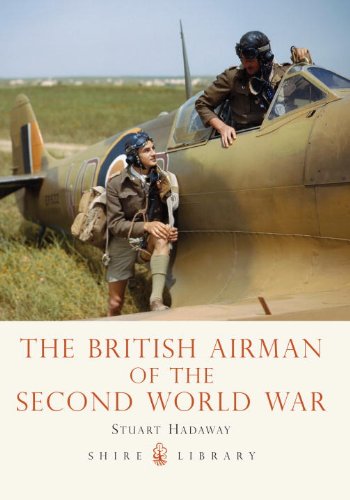
Stuart Hadaway Book British AirmanThe British Airman of the Second World War

…is the title of a new book released by the Shire Library written by Stuart Hadaway formerly of the RAF Museum & now working for the Air Historical Branch of the RAF.

I first met Stuart whilst he was at the museum & he was very helpful in helping me tease out details of Flt Lt John Harder’s wartime service; in fact, Stuart wrote the summary that appears both on this website & also on the RAF museum’s website celebrating Americans serving in the RAF.

British airmen experienced a wide range of conditions and challenges during the Second World War. They served in every corner of the globe, operating over oceans and deserts, jungles and cities. In this fully illustrated introduction to the subject, Stuart Hadaway examines the experiences of the young men who, as well as carrying out air offensives, had to fly, navigate and defend their aircraft. The expertise of each crew member could be very specific and even within the same aircraft his skills might be incomprehensible to his companions. The work of the Fleet Air Arm and Army air units are also covered, as are the roles of the ground-based staff who offered the support necessary for a successful mission.

The book is a fantastic read & what’s more, some of the photos used were supplied by me, courtesy of John Harder’s family – thanks guys!

Missing Believed Killed

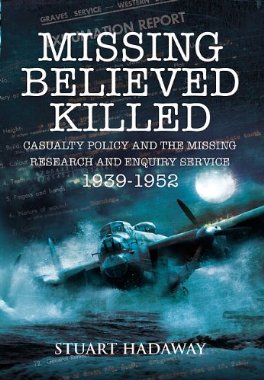
Stuart’s earlier book: Missing Believed Killed tells the story of the Missing Research Section (MRS) of the Air Ministry

Stuart Hadaway Book MBK
During the early years of World War Two it soon became apparent that the system for tracing the whereabouts of the remains of RAF aircrew deemed ‘Missing Believed Killed’ was totally inadequate. The Missing Research Section (MRS) of the Air Ministry was set up in late 1941 to deal with this increasing problem. It collected and collated intelligence reports from a wide variety of official, unofficial and covert sources in an attempt to establish the fate of missing aircrew. Increasingly this included forensic or semi-forensic work to identify personal effects passed on through clandestine channels or bodies washed up on Britain’s shores.In December 1944 the MRS was expanded and a small team of fourteen men, named the Missing Research and Enquiry Service (MRES), was sent to France to seek the missing men on the ground. With 42,000 men missing, the amount that fourteen men could achieve was naturally limited, so in July and August 1945 a series of meetings at the Air Ministry decided on the rapid expansion of the MRES to over twenty-five times its current size, split between six units with set geographical areas of responsibility. This book explains why, in their own words, men volunteered for the job, and why they worked for so long at such a gruesome task. Each faced difficulties in terrain and climate, all the way from the Arctic Circle to the jungles of Burma. Local populations, essential to much of the MRES’s work, ranged from the immensely friendly to the openly hostile; teams had to operate in Germany, only recently razed from end to end by the aircrews they were seeking and then also behind an ever solidifying Iron Curtain. The final chapters explain how to trace RAF members through both personnel and operational records, show where these records are kept and explain how to access them.

Whilst this sounds like a “dry topic”, it’s really facsinatinmg & well explained by Stuart 

Manchester Military History Society

This evening (9th April 2013) I’ve been invited to deliver the monthly lecture to the Manchester Military History Society & so I’ll be sharing the “story so far” and my plans for the future.

This is the third time I’ve had the opportunity and each time, I’ve been able to add more to the picture.

As they say on their website

In 2004, Colin Foster began an investigation to unearth the story & personalities behind a set of names of 18 Allied Servicemen recorded on the inside wall of a wooden shed in Normandy owned by a friend of his.

Nine years later, with much French wine, Cider, Calvados and beer drunk,the research is still ongoing… lots of answers have been found… andplenty more questions raised!

This talk summarises the results so far and sets out the plans for the future.

Last month, I did a “dry run” at the Tameside meeting of the National Association of Road Transport Modellers as their theme was “Agricultural vehicles” & the tenuous link being that Flt Lt John Harder left his Spitfire in a farmer’s field! Received notice of a nice comment, too: “I didn’t think I would be intrested in a ww2 talk and was ready to leave early but due to the enthusiasm of the speaker and the way it was illustrated it held my attention to the end and I’m glad I stopped” which is fantastic to hear

So, just need to tidy up presentation, sort out stuff & ready to roll!

Battle of Gettysburg

Preparations for the 150th Anniversary of the Battle of Gettysburg

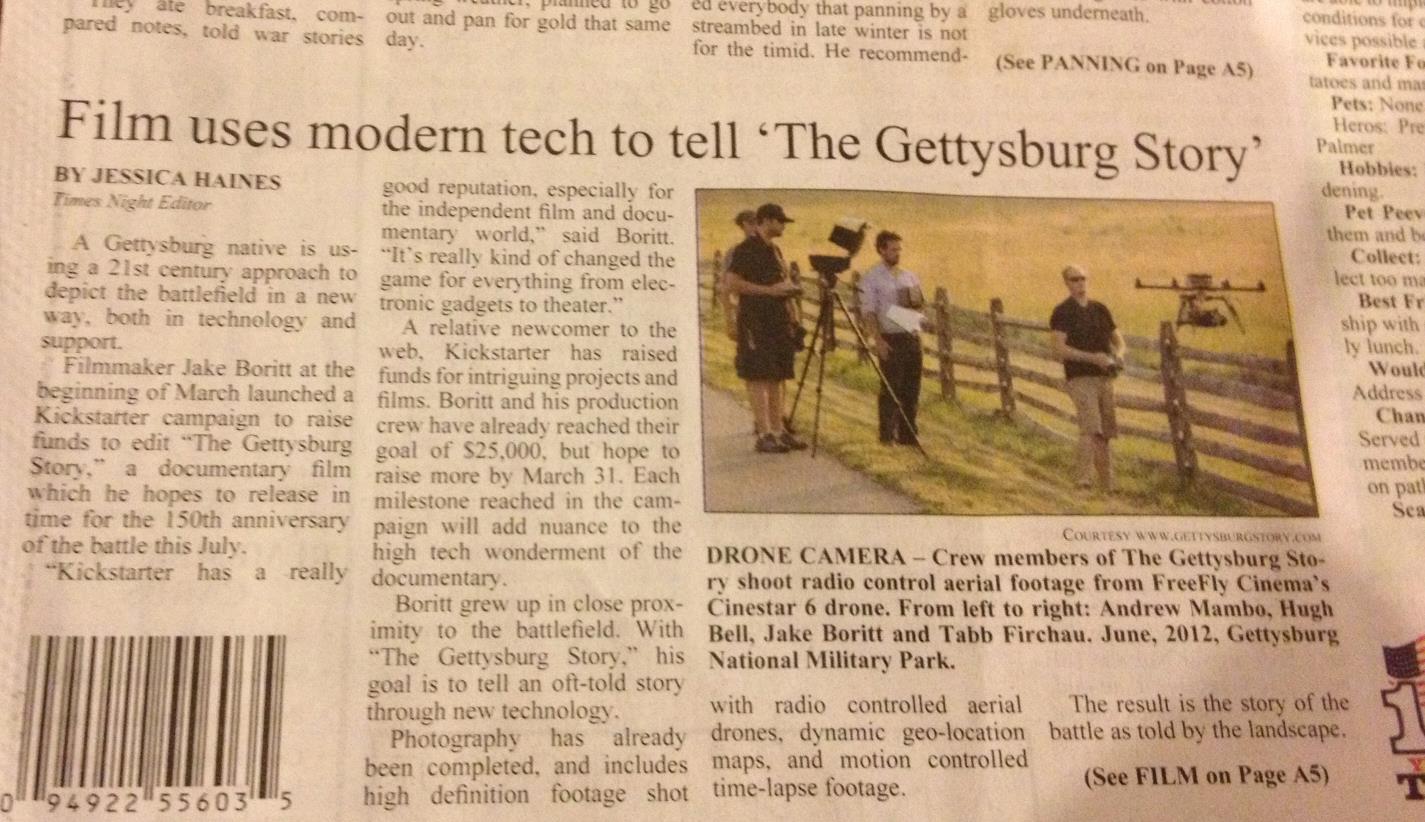
Congratulations to Tabb Firchau & the team at FreeFly Cinema for their success in the upcoming film remembering the 150th anniversary of the Battle of Gettysburg. This three-day battle changed the course of American history. In 1863 George Meade’s Union army defeated Robert E. Lee’s Confederate army in the bloodiest battle in American history.

FreeFly Cinema (Tab Firchau and Hugh Bell) specializes in low altitude aerial filming from remote helicopters. Freefly’s work includes feature films, action sports, commercial campaigns, as well as extensive work for National Geographic. Freefly combines highly experienced pilots, the latest film and video equipment, and cutting edge stabilization technology to ensure smooth footage and accurate flight patterns.

Tabb’s company were also mentioned in “The Times” ((Seattle?)

Gettysburg Newspaper article

The website for “The Gettysburg Story” is http://www.kickstarter.com/projects/boritt/the-gettysburg-story

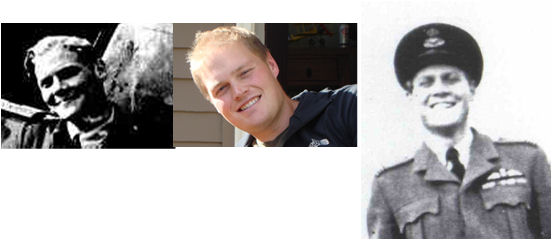
Tabb is one of the grandchildren of Flt Lt John Worthington Harder – you can see the similarity between Tabb & John Harder in this composite photograph…

Junior v Tabb