
 The British Airman of the Second World War
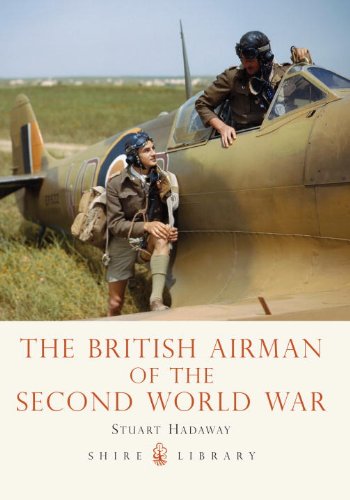
…is the title of a new book released by the Shire Library written by Stuart Hadaway formerly of the RAF Museum & now working for the Air Historical Branch of the RAF.
I first met Stuart whilst he was at the museum & he was very helpful in helping me tease out details of Flt Lt John Harder’s wartime service; in fact, Stuart wrote the summary that appears both on this website & also on the RAF museum’s website celebrating Americans serving in the RAF.
British airmen experienced a wide range of conditions and challenges during the Second World War. They served in every corner of the globe, operating over oceans and deserts, jungles and cities. In this fully illustrated introduction to the subject, Stuart Hadaway examines the experiences of the young men who, as well as carrying out air offensives, had to fly, navigate and defend their aircraft. The expertise of each crew member could be very specific and even within the same aircraft his skills might be incomprehensible to his companions. The work of the Fleet Air Arm and Army air units are also covered, as are the roles of the ground-based staff who offered the support necessary for a successful mission.
The book is a fantastic read & what’s more, some of the photos used were supplied by me, courtesy of John Harder’s family – thanks guys!
Missing Believed Killed
Stuart’s earlier book: Missing Believed Killed tells the story of the Missing Research Section (MRS) of the Air Ministry
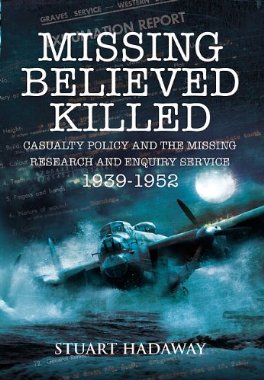
During the early years of World War Two it soon became apparent that the system for tracing the whereabouts of the remains of RAF aircrew deemed ‘Missing Believed Killed’ was totally inadequate. The Missing Research Section (MRS) of the Air Ministry was set up in late 1941 to deal with this increasing problem. It collected and collated intelligence reports from a wide variety of official, unofficial and covert sources in an attempt to establish the fate of missing aircrew. Increasingly this included forensic or semi-forensic work to identify personal effects passed on through clandestine channels or bodies washed up on Britain’s shores.In December 1944 the MRS was expanded and a small team of fourteen men, named the Missing Research and Enquiry Service (MRES), was sent to France to seek the missing men on the ground. With 42,000 men missing, the amount that fourteen men could achieve was naturally limited, so in July and August 1945 a series of meetings at the Air Ministry decided on the rapid expansion of the MRES to over twenty-five times its current size, split between six units with set geographical areas of responsibility. This book explains why, in their own words, men volunteered for the job, and why they worked for so long at such a gruesome task. Each faced difficulties in terrain and climate, all the way from the Arctic Circle to the jungles of Burma. Local populations, essential to much of the MRES’s work, ranged from the immensely friendly to the openly hostile; teams had to operate in Germany, only recently razed from end to end by the aircrews they were seeking and then also behind an ever solidifying Iron Curtain. The final chapters explain how to trace RAF members through both personnel and operational records, show where these records are kept and explain how to access them.
Whilst this sounds like a “dry topic”, it’s really facsinatinmg & well explained by Stuart